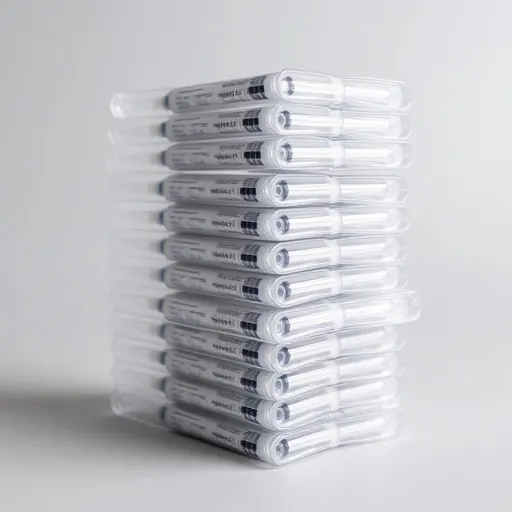
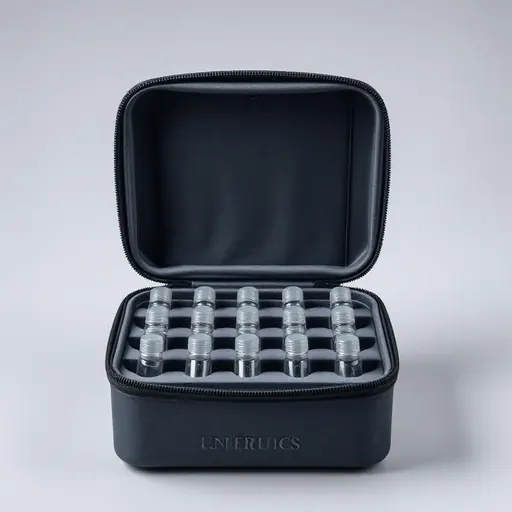
BPC-157 + TB-500 Stack 5 mg + 5 mg — laboratory research dossier
This dossier collects everything a laboratory typically needs before requisitioning BPC-157 + TB-500 Stack at the 5 mg + 5 mg presentation: how the sequence is characterised in published literature, how the material is assayed and released, how it should be stored and reconstituted, and where it sits inside the wider specialty research catalogue. Every unit is supplied as a sealed lyophilized powder at 99.2% and is sold exclusively for laboratory research use. It is not a drug, dietary supplement or cosmetic, and it is not intended for human or veterinary use.
Scientific background
A lot matched two-vial kit combining BPC-157 with the TB-500 actin-binding fragment. It is the most frequently requested pairing in tissue-repair literature because the two compounds act through unrelated pathways.
The most requested recovery pairing, supplied as two lot matched vials with a shared COA set. Investigators most often encounter this sequence in additive-effect experimental design and in angiogenesis plus cytoskeletal remodelling models, which is why the 5 mg + 5 mg vial is the format we release most frequently — it gives enough material for a full dose-response series at typical assay concentrations without leaving a large reconstituted surplus to store.
Mechanism of action in published work
BPC-157 is associated with VEGFR2-driven angiogenic signalling and fibroblast migration; TB-500 modulates the G-actin monomer pool and cytoskeletal remodelling. Mechanistic independence is the reason the pair is commonly studied together in additive-effect designs.
Descriptions above summarise observations reported in peer reviewed in vitro and animal literature. They describe what has been measured in model systems and are not claims of effect, indications, or guidance for use in humans or animals. Laboratories designing new work should return to the primary literature for concentration ranges, vehicle selection and control design, because reported effects in this class are strongly assay dependent.
Research applications
Published work involving BPC-157 + TB-500 Stack clusters into a small number of recurring experimental settings:
- Additive-effect experimental design
- Angiogenesis plus cytoskeletal remodelling models
- Tendon and muscle repair research
- Comparative pathway-independence studies
Because these are in vitro and preclinical contexts, the practical requirement on the material itself is consistency: a known mass of a single sequence, a stated purity, and a lot record that can be cited in a methods section. That is what the 5 mg + 5 mg vial and its accompanying certificate of analysis are designed to provide.
Analytical identity and specification
- Compound
- BPC-157 + TB-500 Stack
- Presentation
- 5 mg + 5 mg lyophilized powder, single sequence per vial
- Reported purity
- 99.2% by RP-HPLC
- Appearance
- White to off-white lyophilized powder or cake, free of visible particulates.
- Unit price
- $64.00 per vial
Purity, quality control and the certificate of analysis
Each BPC-157 + TB-500 Stack lot is assayed in house by reverse-phase HPLC and then re-tested by an independent analytical laboratory using HPLC alongside mass spectrometry for identity confirmation. The HPLC trace establishes the chromatographic purity figure printed on the label — 99.2% for the current release — while the mass spectrometry step confirms that the observed molecular ion matches the expected mass for the sequence rather than a truncated or deletion analogue.
Certificates are issued digitally rather than enclosed in the shipment, which keeps the document versioned and retrievable long after the vial is consumed. You can view or request the current report from the certificates library, and the underlying chromatograms and spectra can be requested through laboratory support. Our full release criteria are documented on the quality control and laboratory standards pages.
Storage, reconstitution and stability
Storage. Sealed 5 mg + 5 mg vials are held desiccated and protected from light. Short holding periods at 2-8 °C are routine; for longer storage the lyophilized cake is kept at -20 °C. Allow the vial to equilibrate to room temperature before breaking the seal so that atmospheric moisture does not condense onto the powder.
Reconstitution. Reconstitute each vial separately with sterile or bacteriostatic water and keep stocks in individually labelled containers so that lot traceability is preserved for each compound.
Stability. As a sealed lyophilized powder the material is stable for extended periods at -20 °C when kept desiccated and protected from light. Once in solution, stability shortens considerably: aqueous stocks are normally held at 2-8 °C for short term work or aliquoted and frozen for longer storage. Repeated freeze-thaw cycling is the most common cause of measurable potency loss.
Handling. Work with the reconstituted solution under standard laboratory containment, record the reconstitution volume and date against the lot, and label aliquots with the resulting concentration. Volumes and concentrations are set by your own protocol; nothing on this page is a dosing instruction.
Experimental design considerations
The most common source of irreproducibility with lyophilized peptides is not the sequence itself but the arithmetic around it. A 5 mg + 5 mg vial contains a nominal peptide mass; the actual peptide content of any lyophilized cake also reflects counter-ion and residual moisture content, so laboratories reporting exact molar concentrations should either use the net peptide content figure from the lot certificate or determine content independently by amino acid analysis or quantitative UV.
Three practical points recur in method sections for this class of material:
- Vehicle matters. Record the diluent, its preservative content and its pH alongside the concentration. Bacteriostatic and sterile water are not interchangeable in every assay, and benzyl alcohol can interfere with sensitive cell based readouts.
- Adsorption is real. At low working concentrations, peptides adsorb to polypropylene and glass. Low-bind labware or a carrier protein in the dilution buffer keeps the delivered concentration close to the nominal one.
- Cite the lot. Because purity, counter-ion and net content vary between syntheses, methods sections should name the supplier lot for BPC-157 + TB-500 Stack so a later replication can be matched to the same analytical record.
Where a study spans several weeks, aliquoting the reconstituted stock immediately and freezing single-use volumes avoids the freeze-thaw cycling that accounts for most of the potency drift observed in longitudinal work.
Choosing the right presentation
BPC-157 + TB-500 Stack is released in a single 5 mg + 5 mg presentation, priced at $64.00 per vial, which covers the concentration range used in most published specialty research work. Whatever presentation you select, the underlying material comes from the same synthesis and release programme, so switching strength does not change the analytical profile.
Orders ship from our facility in Chase City, Virginia, within the United States only, and every shipment carries the research use restriction on the outer documentation. Vials travel at ambient temperature in a rigid insert; lyophilized peptide is stable for the transit window, and the material should be moved to its long term storage temperature on arrival. Research materials are non returnable once dispatched.
Related research compounds and documentation
Laboratories sourcing BPC-157 + TB-500 Stack frequently reference GHK-Cu + BPC-157 Stack 50 mg + 5 mg, Wolverine Stack 10 mg + 10 mg + 50 mg, Wolverine Stack (Copper-Free) 10 mg + 10 mg and Teriparatide 1 mg alongside it, either as comparators in the same assay or as adjacent sequences in the same pathway literature.
This compound is catalogued under Research Peptides, Recovery Research, Specialty Research. The complete research compound catalogue lists every sequence and strength we hold.
Background reading in the research library: Blends and multi-compound research stacks: design considerations, BPC-157: what the research literature describes, BPC-157 vs TB-500: how the two differ.
Ordering details, transit times and our US shipping guarantee are set out on the shipping policy page, and general purchasing and compliance questions are answered in the frequently asked questions. Terms of sale, including our no returns policy on research materials, are published on the terms page.
Quality programme and laboratory support
Every BPC-157 + TB-500 Stack release passes through the same programme: synthesis against a defined sequence, in-house RP-HPLC purity assay, independent third party HPLC and mass spectrometry confirmation, visual inspection of the lyophilized cake, and a documented fill and seal step under inert gas in USP Type I borosilicate glass. Material that fails any stage is not released, and the certificate published for a lot is the certificate generated for that specific synthesis — never a representative or historical document carried over from an earlier batch.
Laboratories evaluating BPC-157 + TB-500 Stack for the first time frequently ask for the raw analytical files rather than the summary certificate. Chromatograms, mass spectra and, where applicable, net peptide content data can be requested for any lot; our support team answers analytical questions directly rather than through a ticket queue. Institutional purchasing, repeat supply for multi-month studies and quotations for multiple strengths are handled the same way.
Terminology used on this page
- Lyophilized
- Freeze dried under vacuum. Removing water as vapour rather than liquid leaves a porous cake that dissolves quickly and is far more stable in storage than a peptide held in solution, which is why BPC-157 + TB-500 Stack is supplied this way rather than pre-reconstituted.
- RP-HPLC purity
- Reverse-phase high performance liquid chromatography separates the target sequence from synthesis-related impurities by hydrophobicity. The reported figure — 99.2% for this material — is the target peak area as a percentage of total integrated peak area.
- Mass spectrometry confirmation
- An orthogonal identity check. Purity alone cannot distinguish the correct sequence from a co-eluting analogue of similar hydrophobicity; measuring the molecular ion confirms that the peak being integrated is the intended molecule.
- Net peptide content
- The fraction of the vial mass that is peptide rather than counter-ion or residual water. It is the figure to use when converting a 5 mg + 5 mg fill into an exact molar stock concentration.
- Research use only
- The material is sold for in vitro and laboratory investigation by qualified personnel. It is not a medicine, supplement, food or cosmetic, carries no approval for human or veterinary administration, and must be handled under the purchasing institution’s own safety procedures.
Literature and further reading
The characterisations summarised above are drawn from peer reviewed in vitro and preclinical publications indexed in PubMed and from the corresponding entries in ChEMBL, PubChem and UniProt. Searching the compound name “BPC-157 + TB-500 Stack” in those databases returns the primary sources for the mechanism and application notes on this page. PrimeGen Co. does not publish clinical data and makes no therapeutic claim for this or any other catalogue item.
For laboratory research use only. Not for human or veterinary use. Not a drug, supplement, food or cosmetic. Read our research use policy before ordering.